
By the end of this article, you will know when “online marketing” is sufficient and when you should widen to “digital marketing” (online + offline digital touchpoints) to unlock signal, trust, and distribution.
Why This Confusion Costs Seed Teams Time
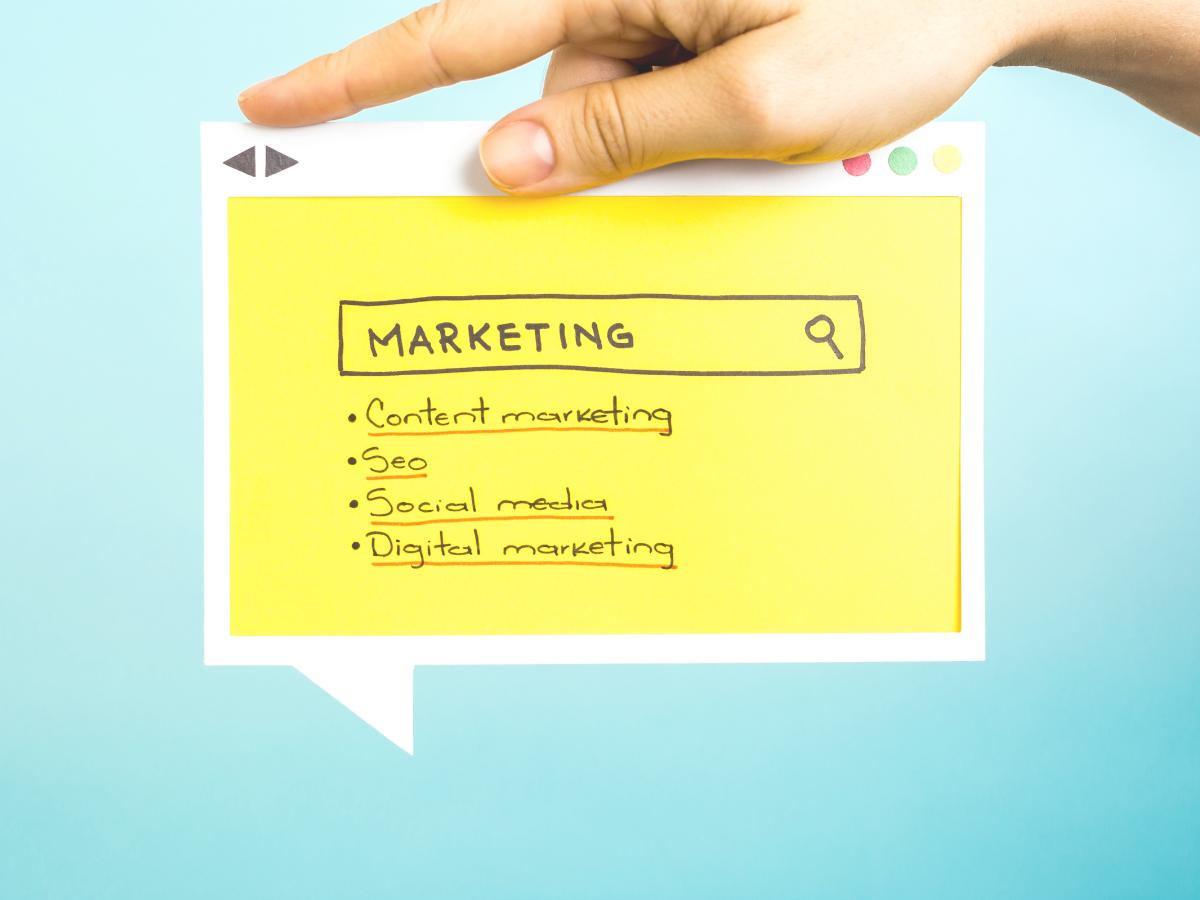
Most startups default to “digital marketing,” but what they actually mean is online marketing:
- SEO
- content
- social
- paid search/social
That default is not wrong. It’s just imprecise, and imprecision creates waste.
At the seed stage, you are not building a marketing department. You are building a signal engine under runway constraints. The real question is:
Do you need internet-only acquisition, or do you need internet + offline digital touchpoints to create demand and trust in your buying environment?
If you collapse these terms, you make two predictable mistakes:
- You overinvest in online tactics even when attention and trust are offline-heavy.
- You chase offline visibility before you have a measurable conversion path.
Online Is the Channel Set. Digital Is the Touchpoint Set.
Use a clean, operational distinction:
- Online marketing = internet-dependent channels (web, search, social, email, and paid platforms).
- Digital marketing = any digital touchpoint, online or offline, used to drive action (online + SMS, QR flows, digital signage/DOOH, streaming/audio placements, etc.).
Here’s the insight that matters for founders:
Online marketing is usually where you find your first repeatable signal.
Digital marketing is how you extend that signal into the real-world contexts where trust and attention actually form.
So: online is the default; digital is the expansion layer.
The 3-Step Decision Protocol
Step 1: Map Your Buying Environment (One Paragraph)
Answer these four questions:
- Where does attention live? (Google, LinkedIn, communities, clinics, campuses, storefronts, events)
- How is trust formed? (peer proof, credentials, referrals, physical presence, social proof)
- How does commitment happen? (self-serve, call, committee, compliance review)
- What is the smallest real commitment? (booked call, deposit, pilot, trial start)
If attention and trust are largely online, online marketing is enough—for now.
If attention or trust is place-based (events, local communities, physical footfall, regulated services), you may need digital marketing beyond “online” to create a measurable bridge.
Step 2: Start With One Online Signal Test (7–10 Days)
Choose one online channel and run a controlled test:
- one ICP slice
- one offer (call/pilot/trial)
- one asset (landing page / outreach script / ad)
- one decision metric (qualified calls, deposits, trials)
Your objective is not “traffic.” It is a signal you can act on:
“We can reliably book X qualified calls per week from Y channel with Z message.”
If you do not have that, expanding into broader “digital” channels will amplify uncertainty.
Step 3: Add Offline Digital Touchpoints (Only When They Are Instrumented)
If your buying environment is offline-heavy, expand digitally—but don’t go blind.
Examples of “digital beyond online” that can work early if instrumented:
- SMS follow-ups for booked leads or event contacts
- QR-driven flows (event signage → landing page → booking)
- Digital out-of-home only with trackable URLs/QR + geo/temporal correlation
- Streaming audio only with a dedicated offer + attribution mechanism
Instrumentation options (pick one):
- unique URL / landing page
- QR code to a single CTA
- unique phone number
- offer code / “mention this phrase” with structured capture
The rule is simple:
If you can’t measure response, you’re only buying vibes.
The Rule That Matters
Online marketing finds signals. Digital marketing extends the signal into the real contexts where trust and attention form only when it’s measurable.
What to Do Next
Within 72 hours:
- Write your buying environment paragraph (Step 1).
- Run one 7–10 day online signal test (Step 2).
- If (and only if) the signal is repeatable, add one instrumented offline digital touchpoint (Step 3).
References & Further Readings
- Google Ads Help. (n.d.). About offline conversion imports. Google.
- Google Analytics Help. (n.d.). URL builders: Collect campaign data with custom URLs. Google.
- GS1. (2023). Best practices for creating your QR Code powered by GS1. GS1.
- Harvard Business Review. (2017, January 3). A Study of 46,000 Shoppers Shows That Omnichannel Retailing Works. Harvard Business Review.
- HubSpot. (2025, April 4). What is digital marketing? HubSpot.
- Interactive Advertising Bureau. (2024, December 12). Digital Out-of-Home (DOOH): Definition and Core Features. IAB.
- Li, H. A., & Kannan, P. K. (2014). Attributing Conversions in a Multichannel Online Marketing Environment: An Empirical Model and a Field Experiment. Journal of Marketing Research.
- Nielsen Norman Group. (2024, February 9). 13 QR-Code Usability Guidelines. Nielsen Norman Group.
- Verhoef, P. C., Kannan, P. K., & Inman, J. J. (2015). From Multi-Channel Retailing to Omni-Channel Retailing: Introduction to the Special Issue on Multi-Channel Retailing. Journal of Retailing.
- Zantedeschi, D., Feit, E. M., & Bradlow, E. T. (2017). Measuring Multichannel Advertising Response. Management Science.